

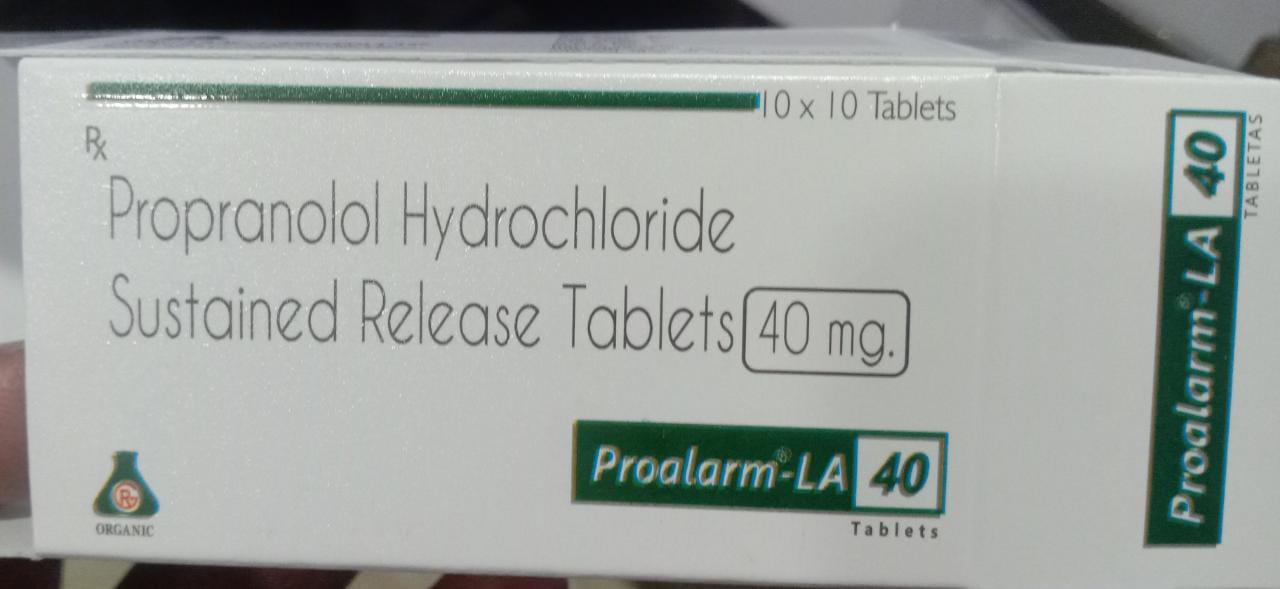
PRO-ALARM-LA 40
MRP. 74.06
Availability: In Stock
Rating:
About PROPRANOLOL HYDROCHLORIDE
PROPRANOLOL HYDROCHLORIDE belongs to a group of medicines called beta-blockers used to treat high
blood pressure (hypertension), heart-related chest pain (angina), and heart rhythm disorder (arrhythmia).
It may also help treat migraine headaches and tremors (fits), protect the heart after a heart attack.
High blood pressure is a condition in which the blood exerts elevated pressure on blood vessel's walls,
leading to various cardiovascular complications like the risk of heart attack and stroke in the future.
PROPRANOLOL HYDROCHLORIDE contains propranolol hydrochloride, which plays a vital role in relaxing
and widening the blood vessels. This lowers blood pressure and helps in reducing the risk of having a
stroke, heart attack, and other heart problems in the future. PROPRANOLOL HYDROCHLORIDE makes it
easier for the heart to pump blood throughout the body by slowing down the heart rate. Thereby, treats
arrhythmia and lowering blood pressure.
PROPRANOLOL HYDROCHLORIDE can be taken orally with or without food or as directed by your physician.
Swallow the whole tablet with a glass of water. Do not crush, chew or break it. PROPRANOLOL
HYDROCHLORIDE may cause certain common side-effects like fatigue, breathlessness, nausea, vomiting,
diarrhoea, and sleep disturbances. These side effects are usually mild and short-lived. However, if the side
effects are persistent, reach out to your doctor.
Do not stop taking PROPRANOLOL HYDROCHLORIDE without talking to your doctor. Stopping PROPRANOLOL
HYDROCHLORIDE may cause changes in your heart rhythm and blood pressure. Consult your doctor before
taking PROPRANOLOL HYDROCHLORIDE if you are pregnant. Avoid breastfeeding while taking PROPRANOLOL
HYDROCHLORIDE. PROPRANOLOL HYDROCHLORIDE may cause dizziness, so drive with caution. Avoid
alcohol consumption while taking PROPRANOLOL HYDROCHLORIDE as it may cause increased dizziness.
Keep your doctor informed about your health condition and medications to rule out any interactions.
Uses of PROPRANOLOL HYDROCHLORIDE
High blood pressure (Hypertension), Chest pain (Angina), Heart rhythm disorder, Prevention of Heart attack
Medicinal Benefits
PROPRANOLOL HYDROCHLORIDE belongs to a group of medicines called beta-blockers used to treat high blood
pressure (hypertension), heart-related chest pain (angina), and heart rhythm disorder (arrhythmia). It may also help
treat migraine headaches and tremors (ts), protect the heart after a heart attack. PROPRANOLOL HYDROCHLORIDE
plays a vital role in relaxing and widening the blood vessels. This lowers blood pressure and helps in reducing the
risk of having a stroke, heart attack, and other heart problems in the future. PROPRANOLOL HYDROCHLORIDE
makes it easier for the heart to pump blood throughout the body by slowing down the heart rate. Thereby, treats
arrhythmia and lowering blood pressure.
Directions for Use
PROPRANOLOL HYDROCHLORIDE can be taken orally with or without food or as directed by your doctor. Swallow
the whole tablet with a glass of water. Do not crush, chew or break it. It is preferable to take it at the same time
every day for better results.
Storage
Store in a cool and dry place away from sunlight
Side Effects of PROPRANOLOL HYDROCHLORIDE
~ Dizziness
~ Fatigue
~ Cold hand/feet
~ Constipation
~ Difficulty in sleeping
~ Nightmares
Drug Warnings
PROPRANOLOL HYDROCHLORIDE should not be used in cardiogenic shock (heart unable to pump sufcient blood)
and heart failure condition. Do not stop taking PROPRANOLOL HYDROCHLORIDE without talking to your doctor rst.
Stopping PROPRANOLOL HYDROCHLORIDE may cause changes in your heart rhythm and blood pressure. Your
doctor will lower your dose gradually over a period of time to help prevent these symptoms. You should not use
PROPRANOLOL HYDROCHLORIDE if you have a very slow heartbeat, asthma, serious heart condition (sick sinus
syndrome) or any heart blockage. Before taking PROPRANOLOL HYDROCHLORIDE you should tell the doctor if
you have any muscle disorder (myasthenia gravis, rhabdomyolysis), breathing problem (COPD, bronchitis,
emphysema), low blood sugar level (hypoglycaemia), low blood pressure (hypotension), depression, previous
heart failure, liver/kidney disease, thyroid hormone disorder, adrenal gland cancer or problems with circulation
(Raynaud’s syndrome). Intake of PROPRANOLOL HYDROCHLORIDE may mask symptoms of diabetes. So tell
your doctor if you have type 1 or type 2 diabetes. It may also worsen your symptoms of congestive heart failure
and bradycardia (slow heart rate less than 60). You should regularly monitor your prothrombin time if
PROPRANOLOL HYDROCHLORIDE is taken with anti-coagulants like warfarin.
Drug Interactions
Drug-Drug Interaction : PROPRANOLOL HYDROCHLORIDE may interact with beta-blockers (acebutolol, atenolol,
bisoprolol, carteolol, esmolol, metoprolol, nadolol, nebivolol or sotalol), blood pressure-related medicines
(lisinopril, enalapril, diltiazem, prazosin, terazosin, doxazosin), asthma medications (theophylline), and pain killers.
If you are using these medicines tell your doctor before taking PROPRANOLOL HYDROCHLORIDE.
Drug-Food Interactions : PROPRANOLOL HYDROCHLORIDE may interact with grapefruit and protein-enriched
foods. Therefore, avoid consuming grapefruit and its juice while taking PROPRANOLOL HYDROCHLORIDE.
Drug-Disease Interactions : PROPRANOLOL HYDROCHLORIDE may have interaction with disease conditions
such as diabetes, thyroid disease, asthma, cardiogenic shock (when the heart fails to pump required blood to
the body), heart valve problem (stenosis), low blood pressure (hypotension), coronary heart disease, liver
disease or heart failure.
Safety Advice
ALCOHOL CONSULT YOUR DOCTOR
You are recommended not to consume alcohol along with PROPRANOLOL HYDROCHLORIDE
to avoid the unpleasant side effects. Consuming alcohol might cause increased dizziness.
PREGNANCY CONSULT YOUR DOCTOR
PROPRANOLOL HYDROCHLORIDE is not recommended during pregnancy unless your
doctor considers it essential. Your doctor will weigh the benets and any potential risks
before prescribing them to you.
BREAST FEEDING CONSULT YOUR DOCTOR
It is not recommended to breastfeed while taking PROPRANOLOL HYDROCHLORIDE.
However, contact your doctor if you have any concerns.
DRIVING
PROPRANOLOL HYDROCHLORIDE is unlikely to affect your ability to drive or to operate
machinery. However, some people may occasionally feel dizzy or tired when taking
PROPRANOLOL HYDROCHLORIDE. Avoid driving or operating machinery unless you are alert.
LIVER
PROPRANOLOL HYDROCHLORIDE should be taken with caution, especially if you have a
history of liver disease. The dose may have to be adjusted by your doctor.
KIDNEY
PROPRANOLOL HYDROCHLORIDE should be taken with caution, especially if you have a
history of kidney disease. The dose may have to be adjusted by your doctor.
Habit Forming
No
Diet & Lifestyle Advise
Do regular physical activity or exercise for at least 150 minutes per week or about 30 minutes most days of
the week. Doing this can help lower your raised blood pressure by about 5 mm of Hg.
Opt for a diet rich in whole grains, fruits, vegetables, and low-fat dairy products.
Limit intake of sodium chloride (table salt) in your daily diet to 2300 mg per day. Less than 1500 mg is ideal
for most adults.
If you are taking alcohol then only one serving for women and two servings for men is advisable.
Quitting smoking is the best strategy to lower the risk of heart disease.
Avoid chronic stress as it can raise your blood pressure. Try to enjoy and spend time with your loved ones
to cope with stress and practice mindfulness techniques.
Monitor your blood pressure daily and if there is too much uctuation then immediately contact your doctor.
Try to include heart-healthy omega 3 fatty acid containing food drinks in your daily diet. You can also use
low-fat cooking oil like olive oil, soybean oil, canola oil and coconut oil can help in lowering your elevated
blood pressure.
Special Advise
PROPRANOLOL HYDROCHLORIDE may cause low blood sugar levels. Check your blood sugar levels regularly
and consult a doctor if you notice any changes.
Tell a doctor straight away if you have shortness of breath with a cough that gets worse when you exercise
(like walking upstairs), swollen ankles or legs, chest pain, or an irregular heartbeat – these are signs of heart
problems.
For Enquiries Please Contact Our Marketing Office
+91 7814701117, +91 7710438807
Office Address : 114/1, Organic House, Phase-5,
Shahi Majra, Industrial Area, Sector 58,
Chandigarh, Punjab - 160055
Email :- pmtorganic@gmail.com
Website :- www.organiclabs.in
Write Your Review